Capturing Royalty: The Little Prince Embroidery Design
In the world of textile art and machine embroidery, the line between generic craft and personalized heirloom often lies in the details. For designers, small business owners, and hobbyists alike, the Little Prince embroidery design represents a perfect convergence of whimsy, color theory, and practical application. It is not merely a pattern; it is a statement piece that transforms standard baby items into boutique-quality keepsakes. Understanding the visual anatomy of this design is the first step to leveraging its full potential in your creative projects.
The Visual Anatomy of the Little Prince
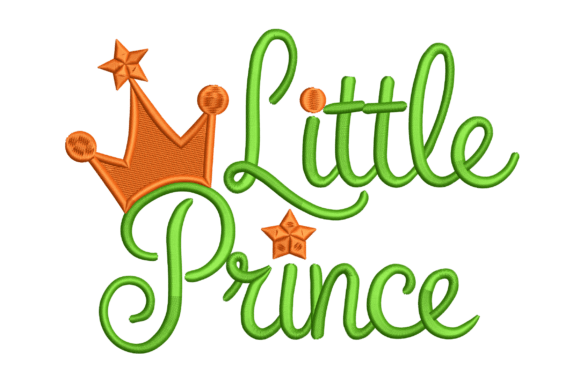
At its core, the Little Prince design is a study in vibrant contrast and playful typography. The centerpiece is a stylized crown rendered in a gradient of bright orange and yellow. This color choice is deliberate; it mimics the warmth of gold without the metallic thread difficulties, offering a sun-kissed, joyful aesthetic that appeals to modern sensibilities. Perched atop the crown is a singular star, anchoring the design and symbolizing the celestial nature of royalty.
Complementing this iconography is the text element, written in a playful, lime-green script. The choice of lime green is a sophisticated design move. It bridges the gap between the warm oranges of the crown and the cool blues or whites typically found on baby bodysuits and blankets. The script style itself suggests movement and energy, avoiding the stiffness of serif fonts while maintaining legibility. Finally, the inclusion of small accent stars and circles creates a "halo" effect, filling negative space and ensuring the design looks cohesive regardless of its final scale.
Strategic Applications: From Bodysuits to Branding
The versatility of the Little Prince design allows it to function as a cornerstone for various product lines. For small business owners running an embroidery shop, this design is a high-value asset. It is perfectly scaled for baby blankets and bodysuits, but it works equally well on bibs and hats. When applied to a nursery wall hanging, the design transcends utility and becomes editorial art.
From a branding perspective, if you are creating a cohesive product line for a baby shower or a child’s first birthday, this design acts as your visual anchor. You can pull the specific hex codes of the orange, yellow, and lime green to create matching digital invitations or social media graphics. This ensures that your physical products and digital presence speak the same visual language, a key component of professional brand identity that builds trust with your customers.
Technical Specifications and Machine Compatibility
For the practical crafter, the value of a design is only as good as its technical execution. The Little Prince design is engineered for machine embroidery, meaning the digitization has been optimized to minimize thread breaks and puckering. It comes with multiple embroidery file formats (such as PES, DST, JEF, and EXP), ensuring compatibility with major machine brands like Brother, Janome, and Bernina.
When working with a design that features both broad fills (the crown) and fine details (the script and stars), proper stabilization is crucial. I recommend using a medium-weight cutaway stabilizer for knit fabrics like baby onesies to prevent the design from stretching with the garment. For woven fabrics like wall hangings or blankets, a tear-away stabilizer is sufficient. The Little Prince design’s density is balanced to sit beautifully on the fabric surface without feeling heavy to the touch, which is essential for infant comfort.
Design Principles: Hierarchy and Color Theory
As designers, we often talk about visual hierarchy—the arrangement of elements to show their order of importance. The Little Prince design executes this flawlessly. The crown is the largest element, immediately drawing the eye. The text provides context, and the accent stars provide texture. This hierarchy ensures that the message is communicated instantly, even from a distance.
The color palette is another area where this design shines. The complementary relationship between orange and green (specifically the lime shade) creates a high-energy vibration that is stimulating for children but pleasing to adult eyes. When integrating this into a larger project, consider the background fabric. A crisp white or a soft navy blue will make the Little Prince colors pop, whereas a pastel yellow might wash out the design's vibrancy. Always test your fabric-to-thread contrast before committing to a final run.
Elevating Your Creative Projects
Whether you are a hobbyist making a gift for a nephew or an entrepreneur building a handmade empire, the Little Prince embroidery design offers a distinct advantage: it looks premium without requiring advanced digitizing skills on your part. It is a "plug-and-play" solution for high-end aesthetics.
Consider using this design not just for traditional baby items, but for modern applications. Embroider it onto a denim jacket for a toddler, or use it as a centerpiece on a tote bag for a parent. The playful nature of the font and the iconography allows it to bridge the gap between children’s fashion and lifestyle accessories. By focusing on quality materials and thoughtful placement, you can use this single design element to create a wide range of products that feel cohesive, professional, and undeniably charming.